
Press [Ctrl + F] to search
Woven and dyed fabrics
<Textile>
江戸更紗
Edo Sarasa
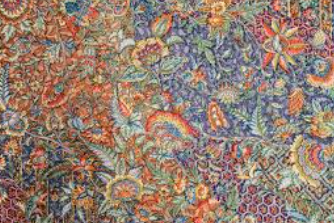

約三千年以上前にインドで誕生した更紗紋様は、木綿に五彩(臙脂、藍、緑、黄、茶)を用いた紋様染めです。アジアやヨーロッパなどに普及し、その土地の歴史や文化を反映しながら発展をし、日本には14〜16世紀頃に伝来したといわれています。江戸更紗は、日本の伝統的な染色技法である型染めを応用することで、複雑な柄を多色刷りに仕上げる独自の進化を遂げました。少ない柄で二十枚、多い柄では九十枚ほどの型染めを繰り返すことで、淡い同色系のグラデーションの表現を可能にしました。さらに日本の染め職人の技術を生かし、染料を生地に摺り込む刷毛の当て具合などをコントロールし、微妙な陰影やぼかしを生み出しています。原色の多色柄を基調とする海外の更紗と異なり、落ち着きのある色合いも特徴です。
Edo Sarasa is a traditional Japanese textile that reinterprets chintz, a colorful cotton fabric that originated in India over 3,000 years ago. Introduced to Japan between the 14th and 16th centuries via trade ships from Europe and Asia, chintz evolved uniquely in Edo by combining its vivid five-color palette—crimson, indigo, green, yellow, and brown—with Japan’s stencil dyeing techniques. Craftsmen would apply 20 to 90 layers of stenciling to create subtle color gradations and delicate shadows, resulting in intricate, multicolored patterns. Unlike the bright primary colors of overseas chintz, Edo Sarasa features a subdued palette influenced by the hard water of Tokyo’s Kanda River, giving it the refined “wabi-sabi” aesthetic. Today, it is exclusively produced in Tokyo and used for both clothing, such as scarves, and interior items like partitions, cherished for its fusion of exotic beauty and Edo elegance.