
Press [Ctrl + F] to search
Pottery
<Ceramics>
陶器製作用の道具
Bamboo and wooden anvil/paddles
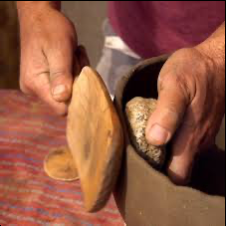

縄文時代から用いられてきた古代の陶工技法です。丸い石または木製の金床を器の内側に当て、平らな木製の櫂で外側を叩きます。この動作により、土壁が薄くなり強度が増し、器の形が整えられます。また、櫂に紐を巻き付けることで、装飾的な質感を残すこともできます。この技法により、陶工はを使わずに、大型で軽量かつ耐久性のある器を作ることができ、縄文土器に独特の紐模様が見られるようになりました。この技法は、後世に至るまで、日本の民芸の伝統において盛んに使用されました。
The Japanese paddle-and-anvil technique is an ancient pottery method used since the Jōmon era. A rounded stone or wooden anvil is held inside the vessel while a flat wooden paddle strikes the outside. This action thins and strengthens the clay walls, shapes the pot, and can leave decorative textures if the paddle is cord-wrapped. The method allowed potters to make large, lightweight, durable vessels without a wheel and gave Jōmon pottery its distinctive cord-marked surfaces. It remained important in Japanese folk pottery traditions well into later periods.