
Press [Ctrl + F] to search
Pottery
<Ceramics>
伊賀焼
Iga Yaki
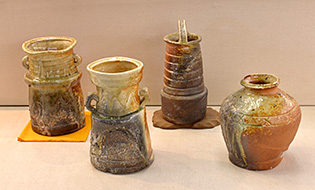

三重県伊賀市を中心につくられる焼き物で、鎌倉時代に生産が始まりました。遥か400万年前、古琵琶湖の時代に花崗岩が風化し湖底に堆積してできた亜炭等を含む陶土とその周辺に広がる赤松などの燃料となる緑の森が土と炎の芸術、伊賀焼を育んできました。古伊賀の個性的な意匠や破調の美を生み、それらが伊賀の土鍋等に見られる強い耐火性につながっています。使用される粘土は古琵琶湖層から産出されたもので耐火度が非常に高いという特性を持っています。特性を生かし高温で何度も焼成する「伊賀の七度焼」と呼ばれる製法により、窯の中で壊れてしまうものも多いです。そのため、完成品としてとりだせるものはごくわずかとなります。焦げと窯変によるビードロ、力強い形が独特で、土の風合いを生かした焼き物が多いのが特徴です。
Iga Yaki is pottery made primarily in Iga City, Mie Prefecture. Production began in the Kamakura period (1185 to 1333). The fire-resistant clay, sourced from an ancient bed of Lake Biwa originally located in the Iga City area, contains lignite. This contributes to Iga Yaki's distinct firing properties and unique characteristics. These include "bidoro" (a natural glaze resulting from scorching) and "yohen" (changes not intentionally applied by the potter, but occurring in the kiln). In addition, the clay supports powerful forms, allowing for bold, natural shaping. The demanding “Iga's Nanadoyaki,” or Seven Firings of Iga, involves multiple high-temperature firings that often result in breakage, meaning only a small number of pieces are retrieved as finished products.