
Press [Ctrl + F] to search
Metalwork and stonework
<Metal and Stone>
松江和釘
Matsue Wakugi
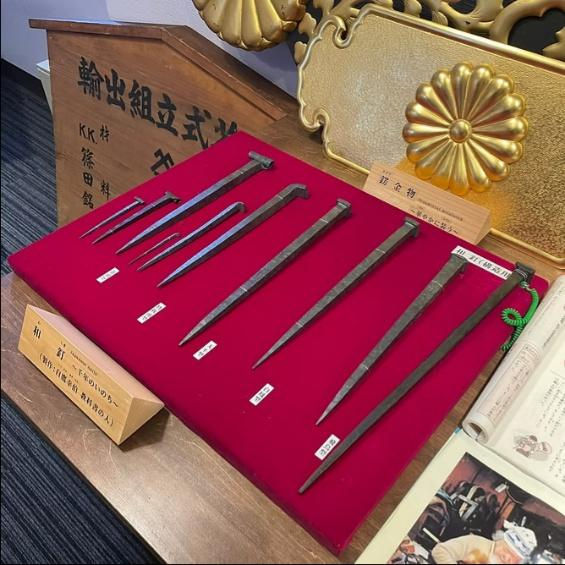

島根県に伝わる伝統的な和釘は、松江和釘(まつえわくぎ)と呼ばれ、飛鳥時代から木造建築に欠かせない存在でした。四角い軸としっかりとしたグリップが特徴で、木の節にもしなやかにフィットし、錆びにくいという優れた耐久性が特徴です。後に洋釘が一般的になりましたが、和釘は今もなお、由緒ある職人技の象徴として受け継がれています。今日では、ごく少数の職人によって伝統が受け継がれており、隈研吾氏のような現代建築家は、和釘をデザイン要素として取り入れ、その耐久性、繊細な美しさ、そして工芸の文化的遺産を称えています。
Traditional Japanese-style nails are referred to as Matsue Wakugi when associated with the broader crafts tradition of regions like Shimane. They have been integral to wooden architecture since the Asuka period. Characterized by their square shafts and robust grip, they offer exceptional longevity, resisting rust while flexing around wood knots. Though Western-style nails eventually became common, wa-kugi remain a symbol of time-honored craftsmanship. Today, only a few artisans (such as Myochin Honpo) continue the tradition, and contemporary architects like Kengo Kuma have even celebrated these nails as design elements—honoring their durability, subtle beauty, and the craft’s cultural legacy.